
Why the product portfolio belongs on every transformation agenda

1. Complexity eats up returns
Each additional product or variant increases:
Manufacturing and storage costs
Forecasting effort and risk
Training needs for sales and service
Coordination effort across silos
When margin targets are missed, the cause is often less due to "excessive costs" than to too many products with too little contribution.
2. Transformation requires focus products
Transformation goals such as "more service," "more software," or "new business models" require products that support this narrative—and others that are systematically phased out. As long as the old, fragmented product portfolio is carried along, budgets, attention, and resources remain too fragmented.
3. Customer focus instead of the illusion of variety
Many portfolios reveal the same pattern: a small portion of the products generates the majority of revenue and contribution margin – the rest primarily creates complexity. True customer focus therefore means consistently concentrating on products that solve real customer problems – instead of maintaining a variety of variants that have grown organically over time but no longer serve a clear purpose.
Three practical analyses that should be included in every transformation project
Analysis 1: Pareto analysis – Who actually finances the transformation?
Key question: Which 10–20% of the products contribute 70–90% of the contribution margin?
Practical example: In an industrial company I worked with, 12 out of 140 products accounted for almost 78% of the contribution margin – the rest was "portfolio noise". The first wave of transformation deliberately focused on these 12; only then did they address the "rest".

The Pareto curve reveals what the portfolio actually finances – and what only creates complexity.
Analysis 2: BCG Matrix – Which products play which role in the transformation?
The BCG matrix remains useful as a rough compass: Stars, Cash Cows, Question Marks, Dogs.

Example from the data center environment:
Stars: New, modular high-density solutions – ideal for telling the transformation story of “energy-efficient & scalable” in the market.
Cash Cows: Classic standard racks – finance the transformation, but above all require cost discipline.
Question Marks: IoT-based monitoring services – strategically exciting, but with unclear traction.
Dogs: Old specialty products for a small number of existing customers – high service costs, poor strategy fit.
The transformation program prioritized Stars and selected Question Marks, while clear exit pathways with migration offers were defined for the Dogs.
Analysis 3: Complexity & Migration Analysis – What happens when we eliminate variants?
Key question: Which variants cause disproportionate complexity – and how do we transition customers to standard variants?
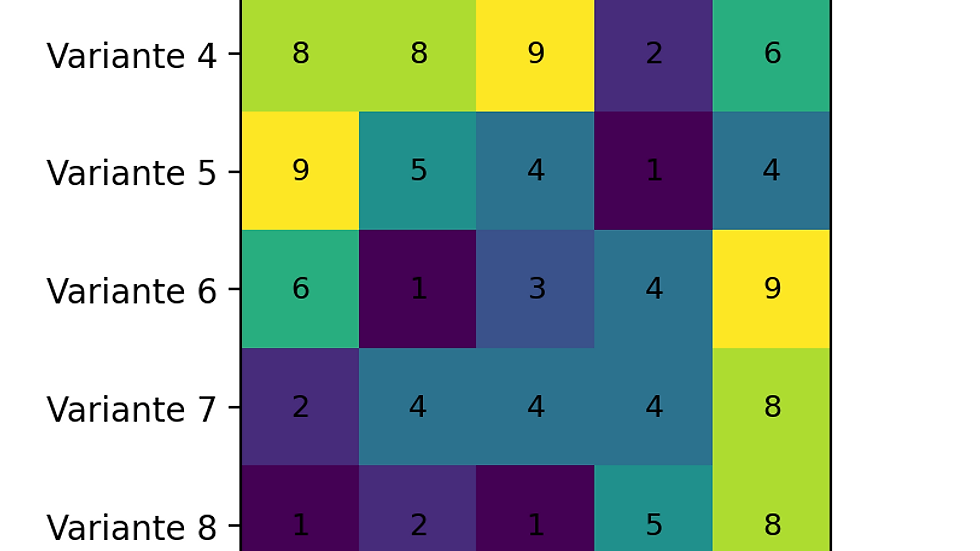
Example from mechanical engineering: A series production business with around 40 variants of a device:
Nine variants had fewer than 5 orders per year, but caused high setup and planning costs.
Three standard variants functionally covered 80–90% of the rarely sold special variants.
Solution:
Definition of clear migration paths ("Variant X12 → future X08 + adapter")
Sales pitch: "Same function, available faster, easier to service."

Result: Fewer variants, simplified planning, lower inventory – with stable sales.
Where product and portfolio management belongs in transformation programs
In my view, every transformation or restructuring program should have its own dedicated stream: “Product & Portfolio Strategy” – with clear responsibility, data basis and decision-making process.
Typical tasks in this stream:
Translating the corporate strategy into a target vision for the portfolio
Determining which products will carry the transformation story in the market
Definition of investment AND divestment decisions
Managing portfolio transformation over several years
Product management thus transforms from "requirements management" into a central transformation function within the company.
Conclusion – and a question for you
Without a portfolio focus, many programs merely optimize structures around a portfolio that no longer fits the strategy. With clear analyses – Pareto, BCG, complexity, and migration perspectives – very concrete decisions can be made:
which products will finance your transformation
which they tell
and which ones you should bravely let go of.
Question for you: How often does your transformation or restructuring programs include a dedicated item on the agenda: “Product & Portfolio Strategy – Target Vision and Streamlining”?
If you are facing a transformation or restructuring and your product and service portfolio has so far been more of a "go-within" process than an active one: As an interim Product & Portfolio Leader, I support technical B2B companies in aligning their portfolio, strategy and organization so that the transformation does not fail due to a lack of product variety.
This article and the illustrations were partly written with the help of AI.


Comments